

November 10, 2026
By Tri County All Restorations
5 Common Causes of Mold in Fort Lauderdale Homes
Mold Damage, Mold remediation

Quick answer: Mold needs moisture, so almost every case traces back to one of five sources: high indoor humidity, plumbing or roof leaks, AC condensation and clogged drain lines, poor ventilation, and water damage that was not dried within 24 to 48 hours. Fix the moisture source and mold has nothing to grow on.
Reviewed by Gary Ackel, owner of Tri-County All Restorations, a Florida licensed mold remediator (MRSR2307) based in Oakland Park. Updated November 2026.
Why does mold grow so easily in Fort Lauderdale?
Mold spores are everywhere, indoors and out. They only grow when they find moisture, and Fort Lauderdale supplies plenty: high outdoor humidity most of the year, heavy summer rain, hurricane season and air conditioners that pull water out of the air every day. When that moisture collects on drywall, wood or fabric for more than a day or two, mold can start.
Cause 1: High indoor humidity
When indoor humidity stays above 60 percent, walls, closets and furniture absorb enough moisture for mold. Signs include a musty smell, damp-feeling air and condensation on windows. Fix: keep the AC running in summer instead of switching it off, use a dehumidifier in problem rooms, and aim for 30 to 50 percent humidity, as the EPA recommends.
Cause 2: Plumbing and roof leaks
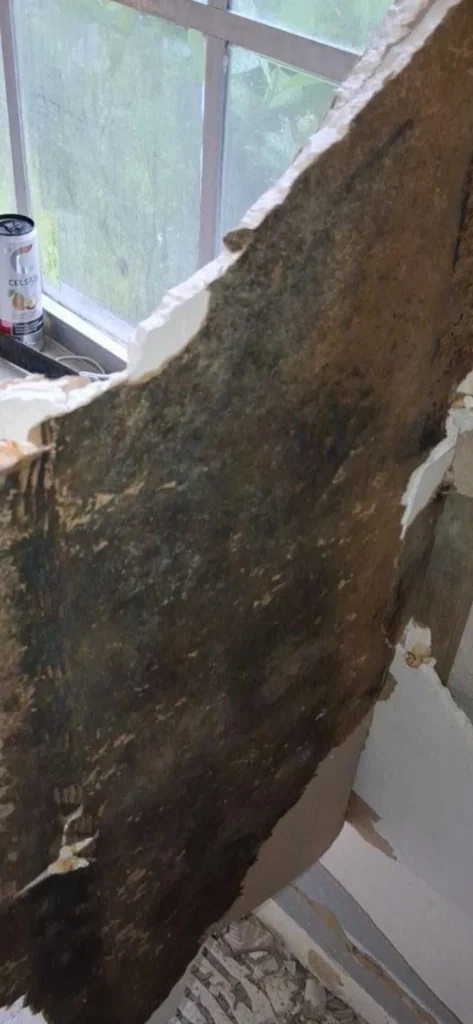
Slow leaks under sinks, behind toilets, at water heaters and through roofs or windows soak materials you cannot see. By the time a stain appears, mold is often growing inside the wall. Fix: check under sinks and around fixtures every few months, watch ceilings after storms, and repair leaks right away.
Cause 3: AC condensation and clogged drain lines
Your air conditioner removes gallons of water from the air. If the drain line clogs or the pan overflows, that water lands on drywall, flooring or the air handler closet. Fix: keep the drain line clear, change filters on schedule and have the system serviced yearly. See our guide to mold in AC units.
Cause 4: Poor ventilation
Bathrooms, laundry rooms, kitchens and closets on exterior walls trap moist air. Without airflow, that moisture settles on cool surfaces. Fix: run exhaust fans during and after showers and cooking, leave closet doors open when you can, and avoid packing closets against exterior walls. Read how to prevent bathroom mold.
Cause 5: Water damage that was not dried fast enough
The EPA advises drying water-damaged materials within 24 to 48 hours to prevent mold. Fans alone often leave water inside walls, under flooring and in cabinets. Fix: after any flood, burst pipe or AC overflow, remove standing water quickly and confirm materials are dry with a moisture meter, not just by touch. Our water damage restoration team does this with thermal imaging.
How do I know if mold has already started?
A musty smell, spots on walls or grout, peeling paint and allergy-like symptoms that ease when you leave home are the common signs. Our guide to how to know if you have mold walks through each one.
When should I call a mold remediation company?
Call a professional when mold covers more than about 10 square feet, came from sewage or floodwater, is in the AC system, or keeps returning after cleaning. Tri-County finds and fixes the moisture source, arranges independent testing when needed and handles mold remediation in Fort Lauderdale to the IICRC S520 standard. Call (954) 776-1717, 24/7.
Frequently asked questions
Can mold grow without a leak?
Yes. In South Florida, humidity and condensation alone can keep surfaces damp enough for mold, especially in closets, bathrooms and rooms where air does not move. Keeping indoor humidity below 60 percent prevents most of it.
What humidity level prevents mold?
The EPA recommends keeping indoor humidity below 60 percent, ideally between 30 and 50 percent. An inexpensive hygrometer from a hardware store tells you where your home stands.